The post Resources appeared first on Project Anime.
]]>Japan Content Catalog
The Japan Content Catalog (JACC®) is a database that consolidates Japanese content rights and contact information from Japan Book Bank, Japan Creator Bank, Anime Chara DB, Japan Film Database, and many more. Through JACC, you can search copyright-related information (the basic data and who to contact) with a search system that integrates databases on movies, television programs, animation, characters, music, games, books, and more.
Japan Anime Music Lab (JAMLAB)
Interested in bringing Japanese musicians to your event but have no idea where to start? Sign up for Japan Anime Music Lab at no cost to learn about new artists and get in touch with record label representatives. Launched by PROMIC in 2018, JAMLAB is an official information hub that serves to connect music and licensing industry professionals with event and concert promoters worldwide. PROMIC, a Japanese foundation that supports the growth of Japanese music internationally and promotes international business relationships through music, also runs the annual Tokyo International Music Market (TIMM), the largest B2B music trade show in Japan.
Currently, over 15 Japanese companies and record labels participate in JAMLAB. There is no cost associated with signing up, and the service can also be used to get in touch with official rights holders for music use clearances.
National Directory of Volunteer Lawyers for the Arts
Located in New York, Volunteer Lawyers for the Arts (VLA) is a nonprofit legal service organization that provides education and resources for artists and creatives of all types. VLA has put together a list of similar organizations or alternative legal information referral options throughout the United States. While not associated with any of the organizations on their list, it is a great source for the creative community to get information about pro-bono legal assistance, lawyer referrals, alternative dispute resolution, and educational programming/workshops.
Note: Membership/service fees and income qualifications for pro bono legal assistance vary across organizations.
FanCons.com
FansCons is a comprehensive database of fan conventions all over the world. You can search by type, location, and year. Each event year lists the participating guests, badge prices, and attendance (if available). If you search by guest, you can also see all the events they have participated in. The interactive map also lists events by year all the way back to 1936.
The ConRunner’s Wiki
Started in 2005, ConRunner is a collaborative guide on how to set up and run a science fiction convention. Full of “why and how-to references for convention organizers,” this wiki site aims to document all aspects of running a successful and enjoyable convention. With over 250 content pages that span a wide range of topics such as art shows, masquerade, and more.
Event Safety Alliance
The Event Safety Alliance is a 501(c)(6) non-profit organization dedicated to promoting “life safety first” throughout all phases of event production and execution. They offer training and workshops, host events and symposiums, and publish safety guidance specifically directed at the live event industry. Their list of safety resources covers a variety of standards and guidelines around the world. Published resources include The Event Safety Guide, Crowd Management, and Weather Preparedness.
IMEX
Whether you are looking for the perfect venue, a capable vendor, or a suitable supplier, IMEX is the destination for the global meetings industry. With over 3500 exhibitors from 155 countries, IMEX America, held in Las Vegas, features hotels, destination management companies, event tech, decorators, and many more.
Anyone who regularly plans events for more than ten people around the world and outside their home state can apply to be a hosted buyer at IMEX. Once approved, IMEX provides flights, accommodations, and admission to hosted buyers at no cost. As a hosted buyer, you will have a quota of meetings you need to schedule with any exhibitor of your choice through IMEX’s online appointment system.
IMEX also offers educational programming such as seminars, expert clinics, research presentations, and workshops. With their partnership with MPI, many of these programs can qualify toward CMP or CEM credits as well.
International Association of Exhibitions and Events (IAEE)
Organized in 1928 as the National Association of Exposition Managers to represent the interests of trade show and exposition managers, the International Association of Exhibitions and Events® is the leading association for the global exhibition industry. Today IAEE represents over 12,000 individuals in over 50 countries who conduct and support exhibitions around the world.
Organizations can sign up for an IAEE Membership to allow their employees to utilize benefits such as professional and leadership development, industry news and resources, webinars, and access to a community of industry professionals to share best practices. IAEE members also receive access to most CEIR (Center for Exhibition Industry Research) research and reports that cover attendee & sponsorship ROI, virtual events, marketing insights, and industry trends.
Have something to add?
Think we’re missing something on this list? Send your suggestions to projectanime@spja.org!
The post Resources appeared first on Project Anime.
]]>The post Do Conventions Still Need Dedicated Video Rooms? appeared first on Project Anime.
]]>With the proliferation of streaming services and the speed at which anime series are localized for global audiences, video rooms do not have the impact on the anime market or fandom that they once had. This begs the question – are video rooms still needed at conventions? We asked anime convention organizers to get their stances.
YES – Video rooms are an integral part of the anime con experience
Darius Washington (Momocon Anime Industry Coordinator) points out that “Even with advances from [the] tape and laserdisc era to modern streams, people aren’t always afforded all chances to connect with new and favorite shows.” For this reason, Washington feels that video rooms are still valuable to maintain video rooms and adds that they “offer something that home screenings don’t – the chance to take in something good and connect with fellow fans even if just for an hour or two.” Nothing compares to the crowd energy.
For Anime Fusion in Minneapolis, Convention Chair Heather Bufkin states that they plan to keep at least two video rooms for the foreseeable future: one for classics and one for new titles. Bufkin “feels [it would be] wrong to have an anime con without showing any anime” and aims to show a curated sample.
While video rooms may not serve the purpose they once did in the 80s/90s, Lauren G., Anime Boston Podcast Head Producer/Museum Staff, likes they can serve as a calm, non-interactive space for attendees looking to take a break from a busy weekend. Bryan Kennedy, Co-Chair for Animethon in Canada, agreed that video rooms offer a space for attendees to rest and aims to continue offering video rooms for attendees who do not have high-speed internet or pay for streaming services. [Event] plans to continue with two video rooms “until demand shows different requirements,” but noted that he does not see video rooms ever going away entirely,
NO – Video rooms are not worth the resources
Kris Berger, President of ECPS (the parent company of Anime Milwaukee) and Director of Facilities for Anime Milwaukee, eliminated video rooms in 2021. “The turnout was so minimal,” says Berger, “that it wasn’t worth it to keep purchasing the licensing.”
For Allie, Convention Chair of Queen City Anime Convention in North Carolina, video rooms were very valuable for attendees in the past when it was not always easy or legal to find anime you wanted to watch, but that value has decreased over time. Since Queen City Anime Convention’s inception in 2017, Allie opted not to have video rooms in favor of prioritizing the space to accommodate panel programming.
Some events have opted to incorporate screenings into other areas or experiences. In addition to their standard video rooms, Kawaii Kon introduced an “Anime Lounge” in the evenings which had a more casual, hangout vibe where attendees could input their picks to play via Crunchyroll. Roy Bann, Senior Admin/Video Director of Kawaii Kon in Hawaii, looks for opportunities to increase traction and saw success with the Anime Lounge, which proved to be very popular among attendees despite only having the lounge open in the evenings. Brandon from NashiCon in South Carolina also discontinued traditional video rooms in 2017-2018 and screened anime in a lounge area instead.
What do you think? Are video rooms a must-have or a waste of space?
We want to hear your thoughts! Vote in the poll or comment below to share your thoughts on video rooms at conventions.
The post Do Conventions Still Need Dedicated Video Rooms? appeared first on Project Anime.
]]>The post Researchers Launch Survey to Gain Insight on Anime Conventions and COVID appeared first on Project Anime.
]]>Convention organizers across the United States and around the world are asking themselves these questions, but the flip side is equally important: how will attendees respond? Con-goers’ interest can make or break an event, so understanding what they want, need, and miss from cons may help ease the transition back to in-person conventions.
To help open this conversation, researchers Billy Tringali and Maria Alberto are running a survey focused on asking these questions of con-goers themselves. Why do we attend anime cons? What do we enjoy most about them? What has it been like to miss them, and is it exciting to have them back? And now that con comebacks are on the horizon for late 2021 and 2022, what are attendees thinking and expecting of anime cons, post-pandemic?
The survey is available here. Please share the survey with your connections and attendees, so that Billy and Maria can gain as much useful data as possible!
What We Ask
“A Survey of Anime Convention Attendance in Response to Covid-19” is a voluntary, completely anonymous survey that takes about 10-30 minutes to complete, depending on how much detail a participant chooses to provide in optional sections.
Participants will be asked where they attend anime cons, which ones they attend, and whether they have observed the widespread cancellation of cons in 2020-2021 having noticeable effects on their own lives. Participants can also provide more detail about their experience with cosplaying, attending virtual cons, and returning to in-person cons as vaccinations increase and travel restrictions ease.
Why We Ask
There’s been a lot of buzz about the unprecedented effects of Covid-19, even in mainstream media. This survey seeks to collect event attendees’ experience of those same effects.
Erik Jansen and Kuo-Yu Liang wonder if it’s time to start taking at least parts of cons online for good. What do con-goers think of this expansion, and how might it affect in-person practices such as cosplay, artists’ alleys, competitions, and more?
Elsewhere, Roland Kelts interviews several con organizers about the fallout of anime cons being cancelled in person and the challenges of moving events online. From the other side, how have con-goers experienced such changes, and what do they think of them? Is there anything about virtual cons that they want continued, or anything about in-person cons they’d like to see changed now that they’ve experienced an alternative?
Audrey Cleo Yap focuses on cosplayers specifically, asking what cosplay is like in a moment of limited social interaction and in-person gatherings. How do cosplayers experience these challenges? How has Covid-19 impacted cosplaying? And by extension, how is cosplay tied up with anime cons specifically?
Without knowing what con-goers expect and hope for in these areas, it may be difficult to meet either individual or collective expectations moving forward.
What Happens Next
The survey will be available through September 2021, kept open while these questions are fresh on people’s minds, particularly as many cons begin to reopen this fall. It is open to anyone over the age of 18 who attends anime cons in any capacity.
After the survey has been closed, the researchers will provide preliminary analysis and then make the raw dataset available to researchers, event organizers, and anyone else interested through a public repository.
A convenient copy-paste message is provided on the final page of the survey, so that participants can share it with their own networks quicky and easily. Please share the survey with your connections and attendees, so that Billy and Maria can gain as much useful data as possible!

Billy Tringali (@BillyTringali) is the founder and editor-in-chief of JAMS: The Journal of Anime and Manga Studies (@OpenAccessAnime), the only open-access journal solely dedicated to publishing high-quality academic works regarding anime, manga, cosplay, and their fandoms. The journal’s first published volume is available at go.Illinois.edu/anime. Billy earned his MLIS from the University of Illinois at Urbana-Champaign and currently works as the Law Librarian for Outreach at Emory University School of Law.

Maria Alberto (@MariaKAlberto) is a PhD candidate at the University of Utah, where her work focuses on fans and their engagement with media texts, particularly pop culture ones. She has presented parts of her research at Akon and Fan Expo Denver, and she is also a manuscript reviewer for The Journal of Anime and Manga Studies. She earned her MA from Cleveland State University.
The post Researchers Launch Survey to Gain Insight on Anime Conventions and COVID appeared first on Project Anime.
]]>The post 3 Ways to Create an Event Experience in a Virtual World appeared first on Project Anime.
]]>Social VR Platforms: VRChat & AltSpace
VRChat and AltSpace are free-to-play social VR platforms that allow players to interact with others as fully customizable 3D character models and create their own worlds. With open-source software development kits, the possibilities are endless. Within VR chat, players can meet, talk, and play games with one another. In addition to hangouts and games, AltSpace offers tools geared toward event hosts such as floating web browsers, raise hand functionality, and FrontRow, a feature geared toward large scale events that allow tens of thousands of viewers to attend a meeting or watch a performance. Both platforms are accessible with or without VR hardware.
While platforms’ SDKs are free for to use, building completely custom content such as worlds or avatar items does require 3D modeling experience in Unity or Blender. AltSpace has several worldbuilding kits and pre-made items created by other community members which make world building easier no matter what level you are at.

DoKomi’s Creamy Island 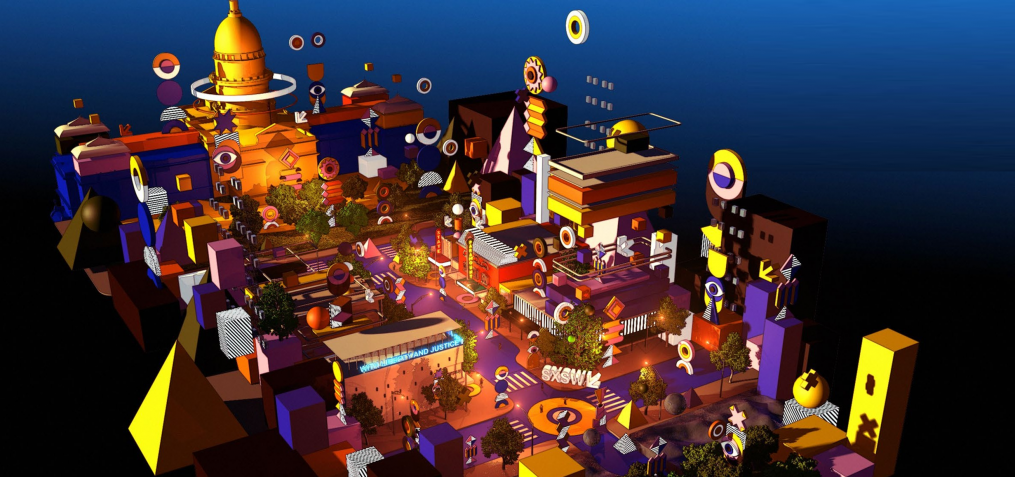
SXSW Virtual Austin World 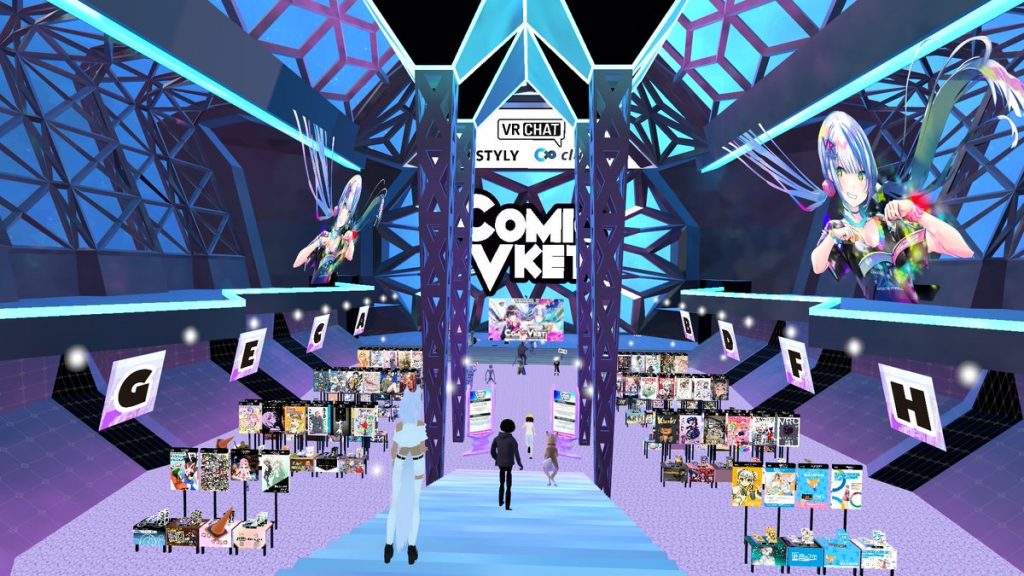
Comic Vket
Events have taken different approaches to utilizing VR Chat over the past year – either recreating their venue (MAGFest’s MAGLord), creating a brand-new experience (DoKomi’s Creamy Island), or blending the two by augmenting a real-world location with fantastical elements (SXSW Virtual Austin World). Other events that have utilized VRChat include Anthrocon and virtual-first Comic Vket (organized by HIKKY, Co; not associated with Comic Market). DoKomi’s VR experience Creamy Island took 6 weeks to produce and had 4300 visitors over the weekend. DoKomi opted to keep the world active for attendees to use as a hangout space throughout the year.
Events hosted on AltSpace include 2020 Paris Fashion Week and BRCvr, a volunteer-supported art event and recognized Universe of the Burning Man Multiverse.
Depending on the event strategy, the worlds can be taken down once the event ends or remain active as a place for fans to meet and connect throughout the year.
Pros:
- Free to use.
- Established community of users.
- VRChat’s user base grown from 8000 concurrent users on Steam in July 2019 to 15,500 in 2020, not including users playing through headsets such as Oculus. [Source]
- The proliferation of anime-style avatars in VRChat shows an overlap between audiences.
- AltSpace’s FrontRow feature offers limitless audience capacity.
Challenges:
- Access limited to 30-80 (VRChat) or 50 (AltSpace) people in a given space/world.
- Download required.
- 3D modeling skills needed for extensive customization.
Minecraft
Minecraft is a sandbox video game that has been around for over a decade and is one of the best-selling video games of all time, with 200 million copies sold and 126 million monthly active users as of 2020. With both single-player and multi-player, along with several different game modes, players can experience the open world in different ways. Gameplay mainly consists of exploring the world, collecting resources as well as building and crafting things to survive. Game modes include survival, creative, adventure, spectator.
The first thing to consider when opting to build a Minecraft server is which edition to use: Java or Bedrock. Java is accessible on any computer (PC, Mac, or Linux), whereas Bedrock allows crossplay between PC, Playstation, Xbox, Switch, and mobile. While Bedrock is available on more platforms, the Java edition can accommodate more players on a given server and has more customization capabilities, including the ability to import images as well as a plethora of free mods to enhance your builds. Java worlds can be converted into Bedrock via third-party tools but will likely still require some tweaks and updates after the conversion.
Events with Minecraft experiences include San Japan, Anime Central, and Anime Milwaukee (AMKE). When creating their Minecraft server, the AMKE team took special attention to not only the visual elements but also the spatial accuracy of the convention center and its surrounding area. To accomplish this, they referenced photos and video in conjunction with Google maps and Google Earth’s measurement tool. AMKE’s team of six people across different departments worked together to create their Minecraft server in the span of about a month. The reaction from attendees made the efforts worthwhile, with over 200 visitors throughout the weekend. Attendees explore the recreation of the convention center and its surrounding area and participated in quests which led them to discover a variety of easter eggs such as NPCs dressed as cosplayers and members of the AMKE team.
Afterward, the Minecraft server can be kept active year-round for a small server hosting fee for players to continue visiting and creating, taken down, or released to fans to use on their own servers. Post-event, AMKE streamed gameplay of their Minecraft server via Twitch after and left it up for a few months after the event so that players could continue to visit and build in.
Pros:
- Established community of players.
- Accessible world-building tools.
- Low-cost, generally $20-30 for a copy of the game.
- Limit to the number of concurrent players is determined by RAM capabilities of your computer or outsourced to a server provider for a monthly fee. For 20-30 concurrent players, server costs are generally minimal (approximately $15-25/month)
Cons:
- Each participant must purchase and download the game.
- Slight learning curve to creating and troubleshooting mods/plug ins.
- Minecraft style is blocky and pixelated.
- Java edition is not available to console or mobile players.
- Bedrock edition has more limited customization options
2D & 3D Event Software Platforms
With the proliferation of virtual events, many platforms offer common features such as video, chat, registration, schedule pages, and attendee lists. 2D event platforms such as vFairs and 6Connex use imagery that mimic real-life event venues for the web navigation experience instead of a more traditional website design. Primarily by industry trade shows and career fairs, these platforms typically charge a per event flat fee or based on an annual contract. Filmocracy and Kumospace offer a 2D room layout that attendees can navigate like a game and simply “walk up” to another attendee or join a table to connect via audio or video chat. Filmocracy is specifically geared toward film festivals and offers subscription plans to encourage attendance to multiple events hosted on their platform.
3D platforms such as Breakroom, MootUp, VirBELA, and Engage offer true immersive spaces and avatar-driven free movement within a virtual space. With the avatar element, they are more akin to VRChat or a game, but they cater to events with ready-made templates and features geared toward exhibitors, speakers, and more. Many of these platforms offer a monthly subscription rate and may also offer VR device compatibility. In addition to events, these platforms are utilized by corporate clients for product launches, training, and teambuilding.
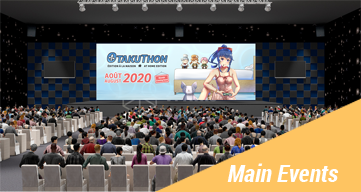
Otakuthon 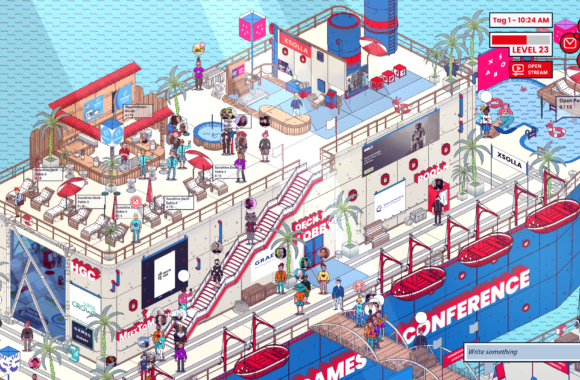
Hamburg Games Conference (SuperCrowd) 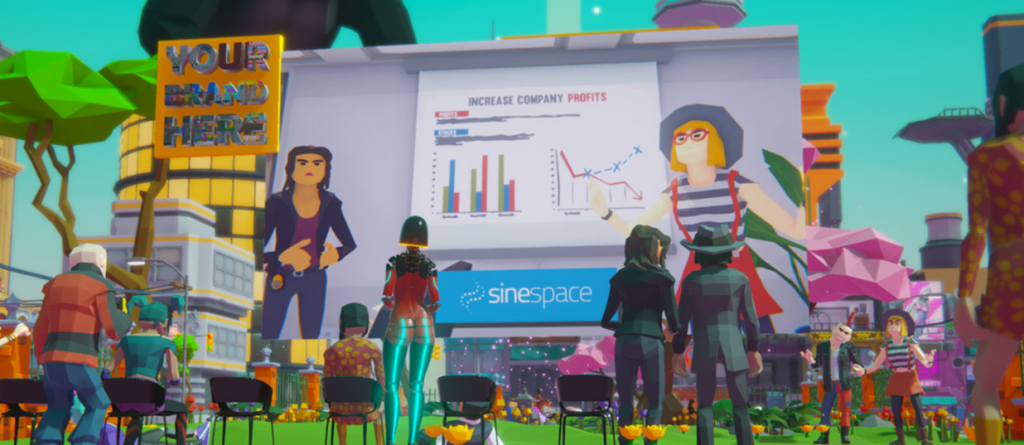
Breakroom
Otakuthon’s at-home edition in 2020 utilized vFairs, while SuperCrowd developed a proprietary online multiplayer game-style platform to power their virtual MAG Erfurt Online. SuperCrowd’s X5 Framework also has avatar-driven movement but operates more like a 2D multiplayer online game.
Pros:
- No download required; browser compatible.
- Customizable templates.
Cons:
- Generally more costly (except for Kumospace which has free options)
- Limited design options outside of templates.
- Requires hands-on configuration.
Conclusion
Whatever platform you decide to use, it will take time to customize and configure. Free or low-cost options like VRChat and Minecraft are generally more “do-it-yourself,” while off-the-shelf products like vFairs and 6connex typically have a set template that you can only do so much with. As in-person experiences return, what role will these platforms have in future event strategy? Will they be another opportunity for engagement during an event’s off-season, or will they fall by the wayside as a relic from the COVID-19 pandemic?
Special thanks to Andreas Degen (DoKomi), Eric, Joey, and Jinnie McManus (AMKE), and Amanda Arizza (Otakuthon) for sharing about their experiences with VRChat, Minecraft, and vFairs respectively.
The post 3 Ways to Create an Event Experience in a Virtual World appeared first on Project Anime.
]]>The post The Future of Pop Culture Conventions After Covid [Op-Ed] appeared first on Project Anime.
]]>By Erik Jansen, President, MediaLab Public Relations & Kuo-Yu Liang, Founder, Ku Worldwide
As 2021 unfolds, the long-awaited arrival of effective COVID vaccines will finally begin to return the world back to ‘normalcy’.
Across the vast North American pop culture space, consumer brands, convention organizers and event promoters look forward to the re-awakening of the prolific convention and trade show scene. A reality, however, is emerging: 2021, or, at least, the first half and, likely, longer, will remain status quo. The re-emergence of live events will be competitive and turbulent as sectors of society and commerce attempt to re-engage and re-vitalize on different tracks and phases.
As the process unfolds, it may be instinctual, or simply convenient, for brands and event organizers to return to the pre-pandemic way of staging and promoting events. But the landscape has changed dramatically.
Technology will continue to offer new ways to connect people. Moving forward, conventions can look to incorporate online (so-called “virtual”) components to build brand visibility and deliver programming to a global audience. From now on, every con can be a global event.
What does this mean?
Every con has the potential to reach a global audience with content on the internet and remove the physical barriers of travel and capacity restrictions that cause a sold-out event.
But to take an event global, there are some important factors to consider including:
- Is the convention content truly global?
- Is the convention really marketing content globally?
- Is content being made globally accessible with language and time zone considerations?
- Is there a global ecommerce and shipping configuration to complement the content?
- Would convention content be restricted in any markets?
Already operating in a highly competitive space, conventions must reengage fans, exhibitors, and sponsors, both online and on-site, and in ways that deliver a new level of personal experience, value, and ROI.
How can conventions differentiate themselves from one another?
In three main ways: 1) exclusive and/or first to market content, 2) cons may feature similar IP but present it in a new way that has not been done before and, 3) by offering competitive pricing.
Brands and exhibitors must also leverage PR and social media in ways that are equally personal, authentic, and scalable for in-person and online con goers.
How do the content and brand partners choose which events to work with if they are all going “global?”
Conventions and brands need to consider:
- The overall level of content and how is it presented
- Brand / exhibitor and convention marketing efforts and how they synergize with each other
- The strength of the fan community
- The overall online user experience with the platform
Virtual technology has demonstrated intriguing capabilities and opportunities to personalize and deliver an intimate, more focused convention experience that can work in tandem with and complement live counterparts. More important, streaming technology offers more enticing ways to break time and distance barriers and deliver value-added content to fans. Virtual versions of Comic-Con, SxSW, Anime Expo, and CES, as well as branded events by DC and Crunchyroll, engaged millions and, will again, this year.
When conventions and live shows return, this online infrastructure will continue to be a critical complement. Now is the time to focus and rethink on ways to improve the fan experience and add value to this burgeoning channel.
Those who cannot attend a con due to geography, time, health, distance, added travel expenses etc. will participate and pay a premium for exclusive or personalized content. The online component also helps cons boost brand equity, expand show attendance, and develop an additional digital revenue / ad stream that can become perennial.
Some factors to consider:
- The online experience will never be an equal substitute for the live version. However, the convergence of digital programming, online delivery platforms and ecommerce – combined with a massive fanbase for pop culture – makes the climate ideal to introduce a new era of “virtual cons” that can operate as a compelling companion to a live event, or, as a stand-alone. Livestreaming features will be fused into the con experience for those at home to access exclusive content – a key draw for convention attendance.
- People already have rich online interactions. There are significant opportunities for con organizers, brand exhibitors, and guests to utilize existing platforms like Twitch and YouTube, to engage attendees in more impactful ways during a tentpole event. Some may choose to build proprietary platforms, like DC’s FanDome. Perhaps, a new open platform, specifically for the online convention experience will be on the horizon.
- Technology continues to offer innovative new ways to connect and touch people. Moving forward, conventions can look to incorporate online these virtual components to build brand visibility and bring programming to a global audience. Like their pro sports and live concert counterparts, conventions will always attract millions of attendees annually to real time on-site events.
- Content that normally would be locked within a concrete convention center is now accessible to the world. To do so in a way that can be monetized, increase production value, enhance the level of exclusivity, personalization is paramount. Con organizers, exhibitors and creators must still deliver all of the programming fans expect – panels, trailers, premieres, Q&A sessions, meet-and-greets, concerts, cosplay shows – but in ways that are also increasingly personal. By next year, a fan may attend a convention in person for two days and then, interact with the remainder of the show from home (with sore feet) enjoying a few online personalized meet-and-greets with guests along with some panels and additional exclusive programming and panels included in his “virtual” pass.
- Ecommerce is already a big part of conventions, but as online programming and delivery models continue to evolve, there could be a significantly bigger audience for exhibitors’ products and con exclusives, often unobtainable to fans that do not attend the show, unless they pay a hefty premium on secondary markets.
- Virtual cons offer the opportunity for the brands, con organizers, and creators to deliver unique products that one cannot find anywhere else and discover a global range of new-found “attendees.” 3rd party e-commerce platforms such as Shopify can provide an easily integrated platform to facilitate commerce for cons and exhibitors.
- For smaller conventions, these opportunities are also within reach. Smaller conventions might seek to collaborate and form alliances to promote common interests and each other’s events by harnessing resources and personnel and utilizing a centralized entity (or agency) to manage overall sales and promotional opportunities. For exhibitors, this collaboration could be a boon with a centralized contact for multiple shows.
The opportunity to reap rewards, adapt to, embrace evolving technology,and deliver an exciting, fan experience is truly compelling. Now is the time to innovate, to build something new and enduring. In the immortal words of the “father of modern business management,” Peter Drucker, conventions must “innovate or die.”
About the Authors
Erik Jansen is an entrepreneur and Marketing executive with more than 20 years of experience representing a variety of technology and entertainment brands via his firm, MediaLab Public Relations. He has marketed and managed convention participation, live events, and media coverage for international clients at major pop culture and trade events such as NAB, IBC, CES, E3, Toy Fair, Anime Expo, Comic-Con, and NY Comic Con. MediaLab has represented iconic Japanese pop culture brands such as VIZ Media, Yen Press, Bandai, New People, and J-Pop/J-Rock music acts for Sony Music Japan, Epic Records, JVC/Victor, Crypton Future Media, and AsobiSystem. MediaLab was also the executive media producer and PR manager for the J-Pop Summit Festival.
Kuo-Yu Liang is the former VP of International Sales & Business Development for Diamond Book Distributors, where he built a new business division to distribute books, collectibles, comics, games, GNs and manga to bookstores, ecommerce, libraries, and schools. Kuo-Yu also served as the Global Director of Business Development for ReedPop where he worked with a portfolio of events including BookExpo, Comic Con Africa, MCM, PAX West, Emerald City Comic Con. And Singapore Comic Con. At ReedPop he also served as Global Director of Sales and working with a wide portfolio of websites including Dicebreaker, Euogamer, Nintendo Life and Rock Paper Shotgun. In 2021 he launched his own pop culture brand and business development firm, Ku Worldwide. Kuo-Yu LIang also sits on the board of directors for the Book Industry Charitable (Binc) Foundation.
The post The Future of Pop Culture Conventions After Covid [Op-Ed] appeared first on Project Anime.
]]>The post 3 Ways to Go Beyond the Virtual Panel with Fan & Guest Interaction appeared first on Project Anime.
]]>Autographs
Virtual autograph sessions can vary in format. At the very least, attendees receive an autographed item from a celebrity of their choice, which is shipped to them at a later time. However, elements such as item availability and level of interaction with the celebrity all depend on the event organizer and celebrity.
vShout
Short for “Video Shout-out,” vShout offers a selection of photo prints through their online shop, but also allows fans to mail in a personal item to be signed such as a photo, poster, DVD sleeve, figure, or book. All mail-in items must be approved prior to purchase. Unique to vShout is the Zobie Certificate of Authentication, which is included with all purchases. James Spence Authentication can be purchased for an additional $8. In addition to the signed item, attendees receive a personalized video message of the autograph process. Participating celebrities include voice actors, actors, and musicians.
vShout has previously partnered with FunimationCon to provide a virtual autograph experience.
- Cost: $40-135 per person
Streamily
Purchasing autographs through Streamily looks like a simple online store, with personalization capabilities and a space for special requests (though not guaranteed). What sets Streamily apart, however, is that celebrities broadcast their signing sessions live on their own accounts such as Twitch or Instagram. When making their purchase, fans can also submit a comment for the celebrity, which will be viewed while their item is being signed during the livestreamed autograph session.
- Cost: $25-100
Unlocked: Virtual Autograph Chat
Unlocked is a mobile livestreaming platform used by actors, cosplayers, and industry professionals in the anime, gaming, and comics.
Unlocked’s virtual autograph sessions include a FaceTime interaction through the app while the talent is signing the autograph. Fans can also submit a question in advance to be answered during the personal face-to-face moment. Fans can choose from several items via Unlocked’s online store, provide their own item, or opt for a FaceTime call only. Unlocked also offers pre-signed items via their online shop.
- Cost: $20-55
Autograph Photo Only
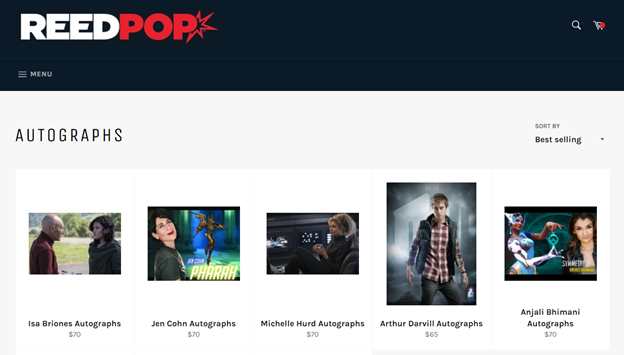
While it is the simplest option, buying autographed photos through an online store is also the most impersonal. Fans can choose from one or more photos depending on the celebrity. Personalization can be requested in the order notes, but listings (such as in ReedPop’s Metaverse) may not state whether such personalization is possible.
Meet & Greets
The format of a virtual meet-and-greet is fairly standard. Virtual meet-and-greet sessions generally consist of a short video call between the attendee and the celebrity held through programs such as Zoom. The session length and number of attendees permitted in a party are up to the discretion of the event organizer and celebrity.
HomeCon
HomeCon was one of the first pioneers of the virtual fan experience. Conceived in 2020 in direct response to restrictions on in-person fan events, it was an entirely virtual event experience that explored the possibilities of digital interaction. Meet-and-greet sessions entailed a five-minute Zoom call with a celebrity of choice, with participating celebrities including select actors from television shows such as The Rookie, Vikings, Orphan Black, Dark Matter, and more.
- Cost: $50 / $80 per person + tax
- An additional four guests could be added for $120 + tax
- Time Limit: 5 minutes
ReedPop’s Metaverse
ReedPop’s August Metaverse offered digital meet-and-greets, personalized video messages, and autographed items from celebrities. Meet-and-greet sessions offered fan interaction with either an individual celebrity or with multiple celebrities depending on the package. Additional people were permitted to be present in the meet-and-greet call as long as they were in the same physical location. Attendees later received a recording of their meet-and-greet. Participating celebrities included voice actors from Overwatch, actors from Black Lightning and Star Trek: Picard, and select comic book writers.
- Cost: $22-77 per person + tax
- Time Limit: 2-3 minutes
Cameo
Cameo is mainly known for personalized video messages, but they recently rolled out a meet-and-greet feature that celebrities can offer as an option. Meet-and-greet sessions are held over Zoom and can include the purchaser and up to four friends for no additional cost. For a much lower price point, celebrities can also offer one-on-one text conversations with a fan.
- Cost: Varies; average $100-500
- Time Limit: 10 minutes
Personalized Video Messages
Virtual personalized video messages often do not include direct interaction between the fan and the celebrity, but they do offer a degree of customization. Fans can include details for personalization such as their name and a request for a specific phrase or action, though fulfilment of these requests is not guaranteed. Video messages tend to be about 60 seconds maximum.
ReedPop’s Metaverse
Reedpop’s Metaverse also offered personalized video messages from participating celebrities. Fans provided the recipient’s name, along with details such as interests, hobbies, hometown, birthday, age, etc. so that the celebrity could make the message as personalized as possible. While fans could request character voices in the instructions, they were not guaranteed. Participating celebrities included voice actors from Overwatch, as well as actors from Black Lightning and Star Trek: Picard.
- Cost: $22-77 per person + tax
- Length: 30-60 seconds video
- Limitations: 250 character limit for script/instructions; no endorsements
Cameo
Cameo’s biggest draw over the years is the ability to purchase a personalized video message from a wide selection of international celebrities. The types of celebrities on Cameo include athletes, actors, comedians, social media influencers, gamers, musicians, reality TV stars, and more. Pricing and availability are entirely determined by the talent and/or their agency. Fans receive their personalized video within seven days of purchase as guaranteed by Cameo’s policy.
- Cost: $1-$2500 + tax
- Length: No requirement; average 25 seconds video
- Limitations: 250 character limit for script/instructions; endorsements permitted if paying for a Promotional Cameo video
These are just a few formats for fostering virtual fan-celebrity interaction, but in the digital landscape, possibilities are endless. New means of connection are sure to arise as we continue to navigate social distance, so if you have any different methods, let us know! Leave a comment or join the conversation in our LinkedIn group.
The post 3 Ways to Go Beyond the Virtual Panel with Fan & Guest Interaction appeared first on Project Anime.
]]>The post Resources for Event Organizers Affected by Coronavirus appeared first on Project Anime.
]]>This article will be updated weekly as the situation develops.
Upcoming Free Webinars
Industry Organization & Other Resources
- BizBash Virtual Event Guide – Top Platforms, programs, and partners for virtual experiences
- Events Industry Council – Resource Page
- MPI (Meeting Professional International): Webinars, toolkit, and other resources
- PCMA (Professional Convention Management Association): Webinars and risk management resources
- IAEE (International Association of Exhibitions and Event): Guidelines for Organizers)
- ILEA (International Live Events Association) COVID-19 Resources
- ASAE (American Society of Association Executives
 ): Issue Round-up: Coronavirus Disease
- CMX: A Comprehensive List of Tips, Tools, and Examples for Event Organizers During the Coronavirus Outbreak
- The Legal Consequences of COVID-19 on Your Contracts: Force Majeure in Different Jurisdictions and Industries, and Some Practical Guidance
Software-Related
- Higher Logic offers Event Engagement, a Free Event Community, to Organizations Dealing with the Cancellations of In-Person Events For events scheduled April 1 – December 31, 2020 [Press Release]
- 42Chat offers Rapid Response AI Chatbot at no cost for events unable to pay $500/month fee
- Discord increases Go Live streaming and screen share limit to 50 people instead of 10
- Eventbrite: Information on the coronavirus
- Toon Boom Offers Free 30-Day (March 13 – April 17) Home Use Licenses To Studios And Schools
- Square refunds subscription fees for current sellers for the month of March + Resources & New Features Coming Soon
Government Resources:
- U.S. Chamber of Commerce: Coronavirus Small Business Guide
- U.S. Small Business Administration: COVID-19 Guidance & Loan Resources
- Small Business Relief Programs – Listed by State via Forbes
Other Resources
- Social Media Management in Times of Crisis via Buffer
- Kiva offers 0% loans up to $15,000 for up to 6 months
- Chase Resources
- American Express Working Capital
Join our group on LinkedIn to let us know about additional resources or discuss how the coronavirus disease is affecting you.
The information provided in this post is for reference only. SPJA/Project Anime does not endorse any of these services nor does it receive any compensation in exchange for clicks or sign-ups.
The post Resources for Event Organizers Affected by Coronavirus appeared first on Project Anime.
]]>The post Line Management Options: Finding the Right Fit appeared first on Project Anime.
]]>
The type of line, the space, and the flexible options in maintaining the queue builds the foundation for:
- Reduced wait times
- An efficient and continuously moving line
- Positive customer experience
Bottom line: An organized line = increased sales.
Types of Lines:
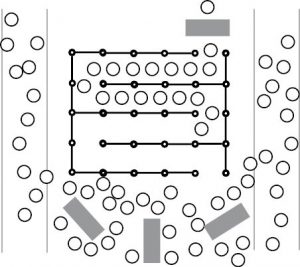
- Straight Line Queue
- Switchback Queue
- Serpentine Queue
Straight Line Queue

Perfect for short lines and quick check-outs.
But, if you expect a large influx of attendees, the straight line queue will cause disorganization and ineffectiveness. This type of line will require a dedicated staff member to maintain line organization during heavy traffic times.
Switchback Queue
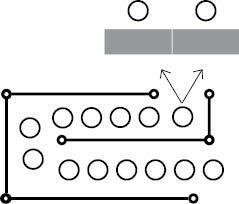
Perfect for lines that have a constant flow of attendees and allows for more control over the line path.
If the line grows past the switchback, it is likely to continue to stretch outwards from the ingress point. This may not only cause confusion, but extend into other locations, block vital pathways, or create unsafe conditions. The switchback queue may require a dedicated staff member to maintain line organization during heavy traffic times.
Serpentine Queue
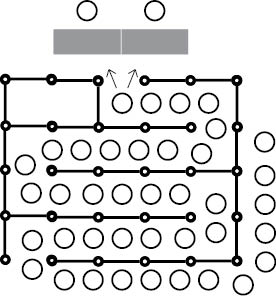
This type of line is developed for ultimate flexibility and efficiency. It can either support a short line during low traffic or a very long line during high traffic.
This flexibility comes with a stanchion design that can be manipulated to your business needs and allows for flexible ingress and egress points. Additionally, by simply removing a couple of the stanchion lines you can create more space for more line, or by putting back up minimal stanchion lines you can create a more direct line to the front.
While this line style maintains flexibility and efficiency, it occupies a lot of space whether fully in use or not. The serpentine queue should not require a dedicated staff member as any trained staff member can manipulate the queue as needed.
Tips for maintaining either of these line types are:
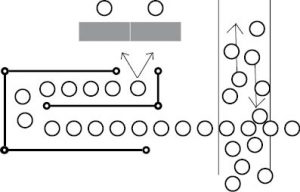
- Capping the line. If the line becomes too long and is causing safety concerns or expanding into other locations, you can temporarily close your line and then reopen when the line shortens.
- Rerouting the line. If the line becomes too long and is causing safety concerns or expanding into other locations AND if you have additional space within your location, you can reroute the line to wrap around or within your space.
- Effective communication. Whether the lines are short or long, effective communication is key. A way to help your attendees is providing clear and concise signage about the line entrance, the check-out location, and the end of the line. In addition, a helpful staff member that can answer questions for attendees in line or for those looking for the end of the line boosts customer satisfaction and attendee expectations for a smooth and effective check-out.
Comparison
Taped Queues vs. Stanchioned Queues
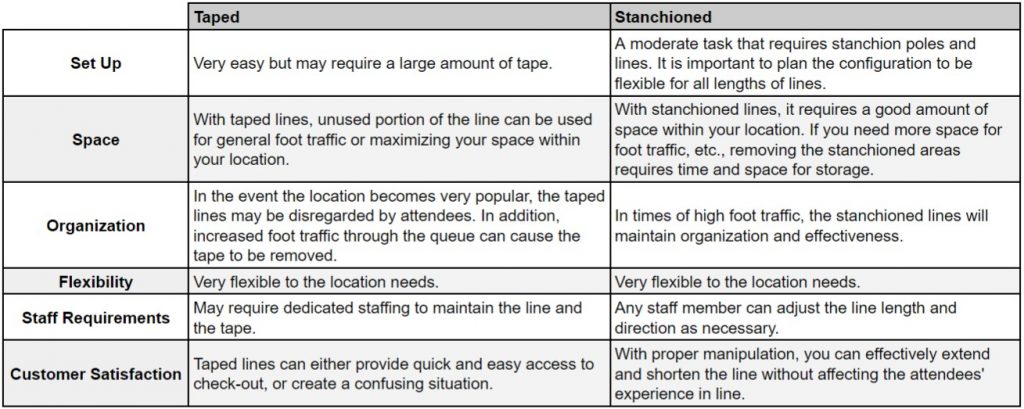
These types of lines are subject to the type of space and budget per event. In selecting either type of line construction, assess the needs of your attendees and event.
The goal should always be to provide your attendees with:
- Reduced wait times
- An efficient and continuously moving line
- Positive customer experience

About Project Anime
Project Anime is an international business service that invites convention directors, executives, anime and Japanese pop culture industry leaders, distributors, exhibitors, and more to discuss ways to improve the anime and Japanese pop culture market in their territories and across the globe. Through providing resources, data, and conferences, Project Anime hopes to empower convention owners and executives, deepen the bonds between the anime industry and conventions, and find new and unique ways that conventions can further reach and grow the anime industry on a global scale.
For more information, please visit http://project-anime.org/.
The post Line Management Options: Finding the Right Fit appeared first on Project Anime.
]]>