The post How Fan Work Guidelines Navigate IP Protection, Free Speech, and Commercial Speech appeared first on Project Anime.
]]>“From a strictly legal standpoint, fan art is a violation of copyright and trademark law, but from a practical standpoint, IP owners often want and need fans to make the stories more popular,” says Gamal Hennessy, attorney and business consultant at Creative Contract Consulting, a practice that specializes in entertainment licensing.
Fanart, Fair Use, and Transformativeness
When it comes to fan creations, a term that is often thrown around is “fair use.” Fair use is a “legal doctrine that promotes the freedom of expression by permitting the unlicensed use of copyright-protected works in certain circumstances,” such as criticism, commentary, reporting, or education. About thirty years ago, the fair use law allowed for the judicial interpretation of “transformativeness” to come along. Marc Greenberg, a law professor at Golden Gate University explains transformativeness as “[if you] add something new to the work, if you interpreted it in a new way, [that is allowed] because we want to encourage creativity in the arts”
To help understand the changing landscape of copyright law, Mr. Greenberg highlights the significance of two landmark cases from recent years: Cariou v. Prince and Paramount Pictures Corp. v. Axanar Productions, Inc.
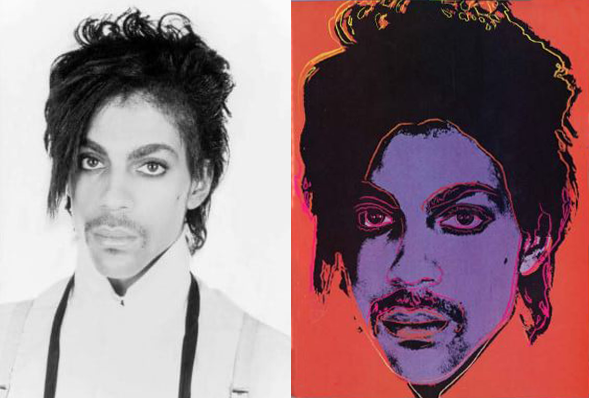
Photo by Lynn Goldsmith (Left) & art featured in Vanity Fair (right) 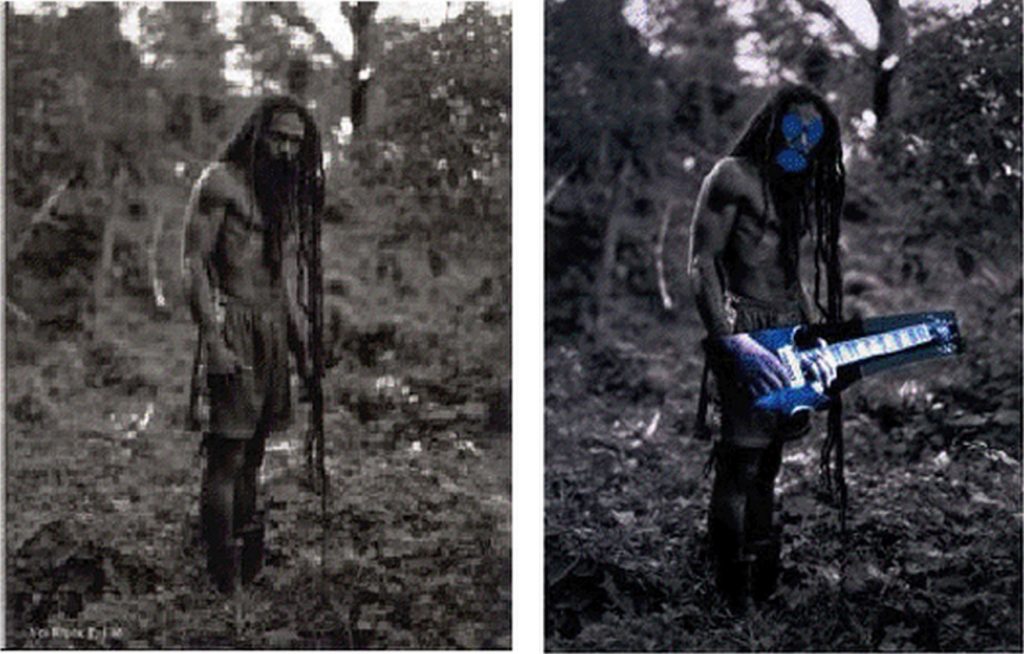
Photo by Richard Prince (left) & artwork by Patrick Cariou (right)
In Cariou v. Prince, artist Richard Prince incorporated photographs by Patrick Cariou in a series of paintings without attribution or licensing. The court concluded that the works were “transformative” to a “reasonable observer” and therefore fair use. While Cariou and Prince settled in 2014, the case set a legal precedent for the court’s interpretation of what is considered a “transformative” work.
In Paramount Pictures v. Axanar, Paramount sued for copyright infringement after fans attempted to crowdfund $1 million to produce a feature-length film inspired by a throwaway line about the “Battle of Axanar” in an early episode of the original Star Trek series. They had successfully raised $20,000 for their first fan film project, but it wasn’t until the second campaign that Paramount took notice and got involved.
Axanar Productions settled with Paramount in 2017, acknowledging that its film projects “were not approved by Paramount or CBS, and that both works crossed boundaries acceptable to CBS and Paramount relating to copyright law.” The settlement required “substantial changes” to be made to the Axanar project as well as agreeing to abide by the newly established guidelines for Star Trek fan films which were created because of the case.
Just recently in August 2021, however. Greenberg noted that the Second Circuit reversed a ruling by the district court which pulls the reins back on what is and is not considered transformative. In the Andy Warhol Foundation v. Goldsmith case, the ruling determined that the Andy Warhol art based on a photo of the musician Prince used on the cover of Vanity Fair magazine was not fair use. He is also keeping an eye on the case between Marvel and the Ditko estate. Although he expects a settlement like what occurred with Kirby v. Marvel Characters, Inc., there could be significant implications for future interpretations of fair use and work-for-hire if the case moves forward.
What to Include
For Mr. Hennessy, the “various types of fan art guidelines attempt to balance the business and legal protection of the IP owners with the desire for fan engagement and interaction that help make the IP valuable.” These guidelines can include restrictions on commercial activities, restrictions on depictions that may be harmful to the brand, restrictions on the use of logos and trademarks, and/or provisions for use by the rightsholder.
While company guidelines start with obvious restrictions on the use of studio logos or specific names, once they get into restricting depictions that are “negative to brand” or “excessive violence,” Mr. Greenberg noted that they start to “wander into content regulation where the brands [say] ‘this is what you can [and cannot] do with the story.’ “
By creating guidelines that fans implicitly agree to by using brands’ products, names, or other elements in their works, companies can enforce these rules independently of free speech or infringement precedents. Mr. Greenberg sees these guidelines most prevalently in the realm of fan films and fan fiction.
That being said, a number of fan work guidelines as listed below do specifically impose limitations on merchandising. Mr. Greenberg says this “makes sense [because merchandising] is an easier infringement case to prove…Merchandising is considered commercial speech, unlike a movie, TV, or film project.” Additionally, “copyright law protects non-commercial speech at a higher level than commercial speech which is what makes merch easier to attack as an infringement.”
Examples of Company IP Guidelines:
- Critical Role Content Policy
- Evangelion Series Fan Work Guideline
- Funimation Issues Statement on Fan Art & Trademark Rights (2015)
- Genshin Impact Overseas Fan-Made Merchandising Guide
- Rooster Teeth Content Usage Guidelines
- Team Salvato IP Guidelines
- Pokémon Legal Information
Important Considerations
When it comes to creating similar guidelines, we asked both Mr. Hennessy and Mr. Greenberg to share their thoughts on what companies should take into consideration. In general Mr. Greenberg prefers a holistic approach starting with the contract process and creating guidelines first rather than in the litigation context. To him, trying to produce such guidelines after the fact is much harder and almost always a losing strategy.
For those who are just starting to develop an IP, determining such guidelines may feel unnecessary, but Mr. Greenberg noted that the need for such guidelines can also “depend on the nature of the product and the world’s acceptance rate.” Because of the continuous changes in judicial interpretation, there is no cookie-cutter approach. “You have to take it on a case-by-case basis and appraise…the likelihood that this [IP] jumps and takes off,” noted Mr. Greenberg. “Some things will benefit from that treatment [of such guidelines] and others won’t.”
Mr. Hennessy echoed the sentiment saying that “IP owner[s] need to consider their relationship to their fan base and the overall marketing strategy of their brand. If their target market is prone to creating fan art or if they plan to use creative influencers to raise the profile of the IP, then they need to consider this kind of policy. A more traditional marketing plan might not need to consider this and [may] be very aggressive with their cease-and-desist letters. For example, Funimation might decide to promote fan art where FIFA might not.”
“If an IP owner is planning to encourage fan art,” continues Mr. Hennessy, “then there are several factors to consider. First, you need to protect both your IP ownership and your ability to generate revenue, so you need to be clear on what fans can or can’t do and that you can ask them to stop at any time. You should also limit or prohibit them from generating money from the fan art. Other considerations include art that damaged the reputation of the IP, association with political issues, or inclusion in compilation works that infringe on the IP of other parties. Finally, you might want to make some claim to license the fan art for your company if it is very high quality or becomes famous.”
When it comes to developing IP or fan work guidelines, Mr. Greenberg stressed the importance of having legal counsel that has relevant experience and knowledge in your field. A business law firm that states they do IP work may be limited to trademark licensing or registration. Entertainment law cases can be seen as appealing work, so attorneys may end up in way over their heads as they are unfamiliar with the industry idioms or norms.
Special thanks to Marc Greenberg and Gamal Hennessy for contributing to this article. Marc Greenberg is a professor at Golden Gate University, author of Comic Art, Creativity and the Law, and lecturer for Comic Book Law School at San Diego Comic-Con. Gamal Hennessy is a comic book attorney, business consultant, and author of The Business of Independent Comic Book Publishing.
The information provided in this article is for general informational purposes only and should not be construed as legal advice.
Looking to learn more? Visit the national directory of Volunteer Lawyers for the Arts to find an organization near you that provides education and resources for artists and creatives of all types.
The post How Fan Work Guidelines Navigate IP Protection, Free Speech, and Commercial Speech appeared first on Project Anime.
]]>The post Get Licensing & Rights Information for Adaptation Opportunities from Japan Book Bank appeared first on Project Anime.
]]>The Visual Industry Promotion Organization launched The Japan Book Bank (JBB), the largest Japanese publishing contents catalog in March 2021. This service is Co-Operated by Japan Book Publishers Association (JBPA) and supported by Tohan, one of the main publication distributors in Japan.
The JBB aims to introduce Japanese book titles worldwide for the purpose of translation and visualization and adaptation (animation, film, etc.). As of August 15th, they have 88 publishers with 1,194 titles in 16 genre categories registered in this service. Every title registered in this service aims to introduce overseas copyrights traders, agents, publishers, and motion picture industry officials. The site enables you to find the Japanese publishing contents by its title, author, publishers, issued date, and the ISBN. On each page of the title, you can see the rights information, the abstract, author’s information, bibliographic information, and the interest in adaptation. Once you create your own account, you can check the detailed information on rights availability and find the licensor contact. The service allows you to browse this information all at once at no cost!
For more information, visit Japan Book Bank’s website.
The Japan Book Publishers Association will host a booth at Frankfurt Book Fair from October 20-24, 2021 featuring a Japan Book Bank display with over 400 titles. Find them in Hall 6.0 C129
The post Get Licensing & Rights Information for Adaptation Opportunities from Japan Book Bank appeared first on Project Anime.
]]>The post 5 Survey-Creation Tips from Anime Academics appeared first on Project Anime.
]]>There’s an art to surveys, though: we’ve all seen versions that we wouldn’t take unless we were being paid to, right? In fact, as the researchers behind the Survey of Anime Convention Attendance in Response to Covid-19, we went through our survey exhaustively to try and create something that people would remain interested in and excited to take.
And it’s seemed to work so far. Asking anime con-goers what they want to see from their favorite cons after a year – and in some cases, two! – away has netted us some fascinating insights about cosplay events and more.
While designing our own survey, we certainly looked to resources like industry leader SurveyMonkey’s 10 Best Practices For Creating Effective Surveys, but at the same time, they’re already experts. So what can people who *don’t* make surveys for a living do?
If you’re thinking of creating a survey for your own con-goers, here are some tips we’d recommend:
1. Have a goal in mind for the survey
In other words, what do you want to achieve with this? Do you just want to see how many attendees enjoyed your con, or do you want to know what they expect from a future event? Keep in mind what you want to know or understand better by sending people this survey, and that will help you figure out what kinds of questions to ask, too.
2. Have a plan for your survey results
Before your survey even goes out, make sure you know what you’ll do with what you find! Make sure you discuss who is in charge of storing data, where it will be stored, and who is the contact person who can answer questions about it.
3. Design your survey to accommodate the people taking it
Or, in other words, make your survey easy for people to take no matter how they’re coming to it. Is your survey accessible for respondents with visual impairments? Is it responsive on mobile devices like phones and tablets? Can your questions be answered using a keyboard *or* a touchscreen?
4. Create clear, straightforward questions
Are questions easy to understand? Just as important, are they hard to misinterpret? Does the survey use skip/display logic (i.e., questions that move people to a new survey page when they answer a question in certain ways) to make sure respondents are only seeing relevant questions?
5. Test your survey early and often
Your survey might seem intuitive to you when you’re creating it, but make sure that you try it out too, just to check! That way, you can catch missing links, navigation issues, and more, before you actually send it out to participants who will report back on those same issues. (Pew Research Center offers more tips on survey design, too!)
Ready to get started on your own survey? Here are some additional reads we’d recommend on survey methods and also on how to create a survey from scratch!

Billy Tringali (@BillyTringali) is the founder and editor-in-chief of JAMS: The Journal of Anime and Manga Studies (@OpenAccessAnime), the only open-access journal solely dedicated to publishing high-quality academic works regarding anime, manga, cosplay, and their fandoms. The journal’s first published volume is available at go.Illinois.edu/anime. Billy earned his MLIS from the University of Illinois at Urbana-Champaign and currently works as the Law Librarian for Outreach at Emory University School of Law.

Maria Alberto (@MariaKAlberto) is a PhD candidate at the University of Utah, where her work focuses on fans and their engagement with media texts, particularly pop culture ones. She has presented parts of her research at Akon and Fan Expo Denver, and she is also a manuscript reviewer for The Journal of Anime and Manga Studies. She earned her MA from Cleveland State University.
The post 5 Survey-Creation Tips from Anime Academics appeared first on Project Anime.
]]>The post Contributor Guidelines appeared first on Project Anime.
]]>Project Anime accepts pitches from potential contributors and looks for diverse perspectives to comment on different topics.
Being a Contributor
Project Anime covers topics related to the business of anime, manga, games, Japanese pop culture, and pop culture events. We publish articles of many lengths and styles including, but not limited to, white papers, case studies, and op-eds. Project Anime does not publish reviews or commentary related to animation style, writing, or other artistic merits.
What We Look For:
- Expertise: You don’t have to be well-known, but you must know about the subject that you’re writing about.
- Evidence: You may know your subject well, but you’ll have to prove it to the reader too. It helps to refer to supporting research or describe relevant examples. If you have interesting data to share, please let us know.
- Originality: We want to share your unique insights.
- Usefulness: Project Anime readers come to us to stay informed about the Japanese pop culture and events industry, as well as look for ways to grow and develop their organizations. Providing a point of view that a reader can apply to a real situation is of particular interest to Project Anime readers.
- Writing that’s interesting to read: Project Anime readers are smart and busy. You’ll need to capture their interest right away and keep them engaged throughout your article.
General Guidelines:
- Contributors are expected to write in a professional manner with no major grammar or spelling errors.
- All facts and sources must be cited appropriately from reputable sources.
- Any relevant affiliations or potential professional conflicts of interest must be disclosed prior to submission.
- Project Anime can provide images to complement your article submission as needed.
- If your pitch is approved, our editorial team will provide feedback on your piece as needed.
Once an article is published, Project Anime reserves the right to keep the article publicly available for as long as it sees fit. The contributor retains the rights to link back to the piece and may republish the article to other websites after it goes live on Project Anime.
How to Submit
Please send your pitch to projectanime@spja.org. In your email, tell us a little about yourself, what you want to write about, and include some relevant writing samples. Please do not send us any completed articles to re-publish on our website.
All submissions will be reviewed by the Project Anime team and provided with feedback. This process may take up to 2 weeks. If your submission is not accepted, we will provide feedback and potentially a recommendation for a different pitch.
Being a Commentator
From time to time, Project Anime’s editorial team develops articles that may require commentary from a variety of sources. If you would like to be considered in the future, please see below for information:
Examples of Content that We Seek Commentators For:
- Debate-style articles that show different perspectives on recent news or other topics
- Insights on industry trends (ex. Anime & Manga Industry Analysts Share Their 2021 Predictions)
What We Look for in Commentators:
- Professional experience in the pop culture or event industry
- Non-anime subject-matter experts who are fans of Japanese pop culture
Interested? Please send an email to projectanime@spja.org with the following information:
- Your professional experience (What do you specialize in? Feel free to send your LinkedIn profile.)
- Your personal interests (What genres do you like? Any notable hobbies?)
- Why you want to be a commentator for Project Anime
The post Contributor Guidelines appeared first on Project Anime.
]]>The post 3 Ways to Go Beyond the Virtual Panel with Fan & Guest Interaction appeared first on Project Anime.
]]>Autographs
Virtual autograph sessions can vary in format. At the very least, attendees receive an autographed item from a celebrity of their choice, which is shipped to them at a later time. However, elements such as item availability and level of interaction with the celebrity all depend on the event organizer and celebrity.
vShout
Short for “Video Shout-out,” vShout offers a selection of photo prints through their online shop, but also allows fans to mail in a personal item to be signed such as a photo, poster, DVD sleeve, figure, or book. All mail-in items must be approved prior to purchase. Unique to vShout is the Zobie Certificate of Authentication, which is included with all purchases. James Spence Authentication can be purchased for an additional $8. In addition to the signed item, attendees receive a personalized video message of the autograph process. Participating celebrities include voice actors, actors, and musicians.
vShout has previously partnered with FunimationCon to provide a virtual autograph experience.
- Cost: $40-135 per person
Streamily
Purchasing autographs through Streamily looks like a simple online store, with personalization capabilities and a space for special requests (though not guaranteed). What sets Streamily apart, however, is that celebrities broadcast their signing sessions live on their own accounts such as Twitch or Instagram. When making their purchase, fans can also submit a comment for the celebrity, which will be viewed while their item is being signed during the livestreamed autograph session.
- Cost: $25-100
Unlocked: Virtual Autograph Chat
Unlocked is a mobile livestreaming platform used by actors, cosplayers, and industry professionals in the anime, gaming, and comics.
Unlocked’s virtual autograph sessions include a FaceTime interaction through the app while the talent is signing the autograph. Fans can also submit a question in advance to be answered during the personal face-to-face moment. Fans can choose from several items via Unlocked’s online store, provide their own item, or opt for a FaceTime call only. Unlocked also offers pre-signed items via their online shop.
- Cost: $20-55
Autograph Photo Only
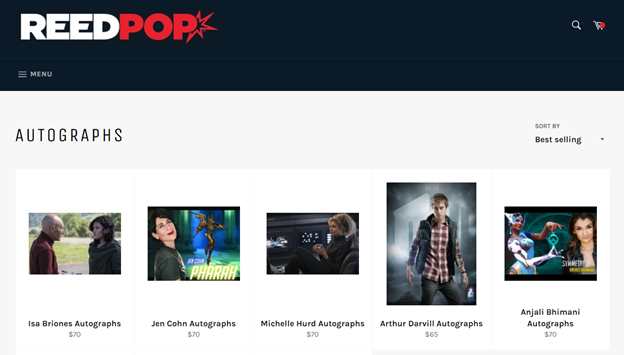
While it is the simplest option, buying autographed photos through an online store is also the most impersonal. Fans can choose from one or more photos depending on the celebrity. Personalization can be requested in the order notes, but listings (such as in ReedPop’s Metaverse) may not state whether such personalization is possible.
Meet & Greets
The format of a virtual meet-and-greet is fairly standard. Virtual meet-and-greet sessions generally consist of a short video call between the attendee and the celebrity held through programs such as Zoom. The session length and number of attendees permitted in a party are up to the discretion of the event organizer and celebrity.
HomeCon
HomeCon was one of the first pioneers of the virtual fan experience. Conceived in 2020 in direct response to restrictions on in-person fan events, it was an entirely virtual event experience that explored the possibilities of digital interaction. Meet-and-greet sessions entailed a five-minute Zoom call with a celebrity of choice, with participating celebrities including select actors from television shows such as The Rookie, Vikings, Orphan Black, Dark Matter, and more.
- Cost: $50 / $80 per person + tax
- An additional four guests could be added for $120 + tax
- Time Limit: 5 minutes
ReedPop’s Metaverse
ReedPop’s August Metaverse offered digital meet-and-greets, personalized video messages, and autographed items from celebrities. Meet-and-greet sessions offered fan interaction with either an individual celebrity or with multiple celebrities depending on the package. Additional people were permitted to be present in the meet-and-greet call as long as they were in the same physical location. Attendees later received a recording of their meet-and-greet. Participating celebrities included voice actors from Overwatch, actors from Black Lightning and Star Trek: Picard, and select comic book writers.
- Cost: $22-77 per person + tax
- Time Limit: 2-3 minutes
Cameo
Cameo is mainly known for personalized video messages, but they recently rolled out a meet-and-greet feature that celebrities can offer as an option. Meet-and-greet sessions are held over Zoom and can include the purchaser and up to four friends for no additional cost. For a much lower price point, celebrities can also offer one-on-one text conversations with a fan.
- Cost: Varies; average $100-500
- Time Limit: 10 minutes
Personalized Video Messages
Virtual personalized video messages often do not include direct interaction between the fan and the celebrity, but they do offer a degree of customization. Fans can include details for personalization such as their name and a request for a specific phrase or action, though fulfilment of these requests is not guaranteed. Video messages tend to be about 60 seconds maximum.
ReedPop’s Metaverse
Reedpop’s Metaverse also offered personalized video messages from participating celebrities. Fans provided the recipient’s name, along with details such as interests, hobbies, hometown, birthday, age, etc. so that the celebrity could make the message as personalized as possible. While fans could request character voices in the instructions, they were not guaranteed. Participating celebrities included voice actors from Overwatch, as well as actors from Black Lightning and Star Trek: Picard.
- Cost: $22-77 per person + tax
- Length: 30-60 seconds video
- Limitations: 250 character limit for script/instructions; no endorsements
Cameo
Cameo’s biggest draw over the years is the ability to purchase a personalized video message from a wide selection of international celebrities. The types of celebrities on Cameo include athletes, actors, comedians, social media influencers, gamers, musicians, reality TV stars, and more. Pricing and availability are entirely determined by the talent and/or their agency. Fans receive their personalized video within seven days of purchase as guaranteed by Cameo’s policy.
- Cost: $1-$2500 + tax
- Length: No requirement; average 25 seconds video
- Limitations: 250 character limit for script/instructions; endorsements permitted if paying for a Promotional Cameo video
These are just a few formats for fostering virtual fan-celebrity interaction, but in the digital landscape, possibilities are endless. New means of connection are sure to arise as we continue to navigate social distance, so if you have any different methods, let us know! Leave a comment or join the conversation in our LinkedIn group.
The post 3 Ways to Go Beyond the Virtual Panel with Fan & Guest Interaction appeared first on Project Anime.
]]>The post Resources for Exhibitors & Artists Affected by Event Cancellations & Postponements appeared first on Project Anime.
]]>This post will be updated regularly as information becomes available.
Join our group on LinkedIn to let us know about additional resources.
Software-Related:
- Two Free Months of Adobe Creative Cloud
- Issuu Offers Digital Sales feature for free through July 1, 2020
- Hootsuite Professional Version available for affected industries at no cost until July 1, 2020
- Square refunds subscription fees for current sellers for the month of March + Resources & New Features Coming Soon
- Toon Boom Offers Free 30-Day (March 13 – April 17) Home Use Licenses To Studios And Schools
- Bandsintown partners with Twitch to offer monetization features for artists with over 2000 followers
- SoundCloud Pro, SoundCloud Premier and Repost by SoundCloud artists get fast-tracked to Twitch Affiliate Status
- Mixcloud waives revenue share, extends PRO trial period for three months
- Waymark Partners with Spectrum Reach to offer Free Video Commercial Templates
Government Resources:
- U.S. Chamber of Commerce: Coronavirus Small Business Guide
- U.S. Small Business Administration: COVID-19 Guidance & Loan Resources
- Small Business Relief Programs – Listed by State via Forbes
Other Financial Assistance Resources
- Kiva offers 0% loans up to $15,000 for up to 6 months
- List Of Banks Offering Relief To Customers Affected By Coronavirus (COVID-19) via Forbes
- Rent Reduction Letter Template (Subscribe to newsletter for access)
Shop Link Lists:
The information provided in this post is for reference only. SPJA/Project Anime does not endorse any of these services nor does it receive any compensation in exchange for clicks or sign-ups.
The post Resources for Exhibitors & Artists Affected by Event Cancellations & Postponements appeared first on Project Anime.
]]>